
How to Plan Your Catholic Wedding Photography Timeline
Planning the timeline for your wedding day can be difficult, particularly when you're having a Catholic wedding. There's the Nuptial Mass to consider, family photographs, couple portraits, travel between the church and reception, and all the little moments in between.
The good news is that you don't need to plan every minute of the day. But there are a few things worth thinking about in advance.
Here are some things I'd recommend considering when planning your Catholic wedding photography timeline.
1. Start with the Nuptial Mass
The first thing I'd recommend is building your timeline around the Mass, rather than trying to fit the Mass around everything else.
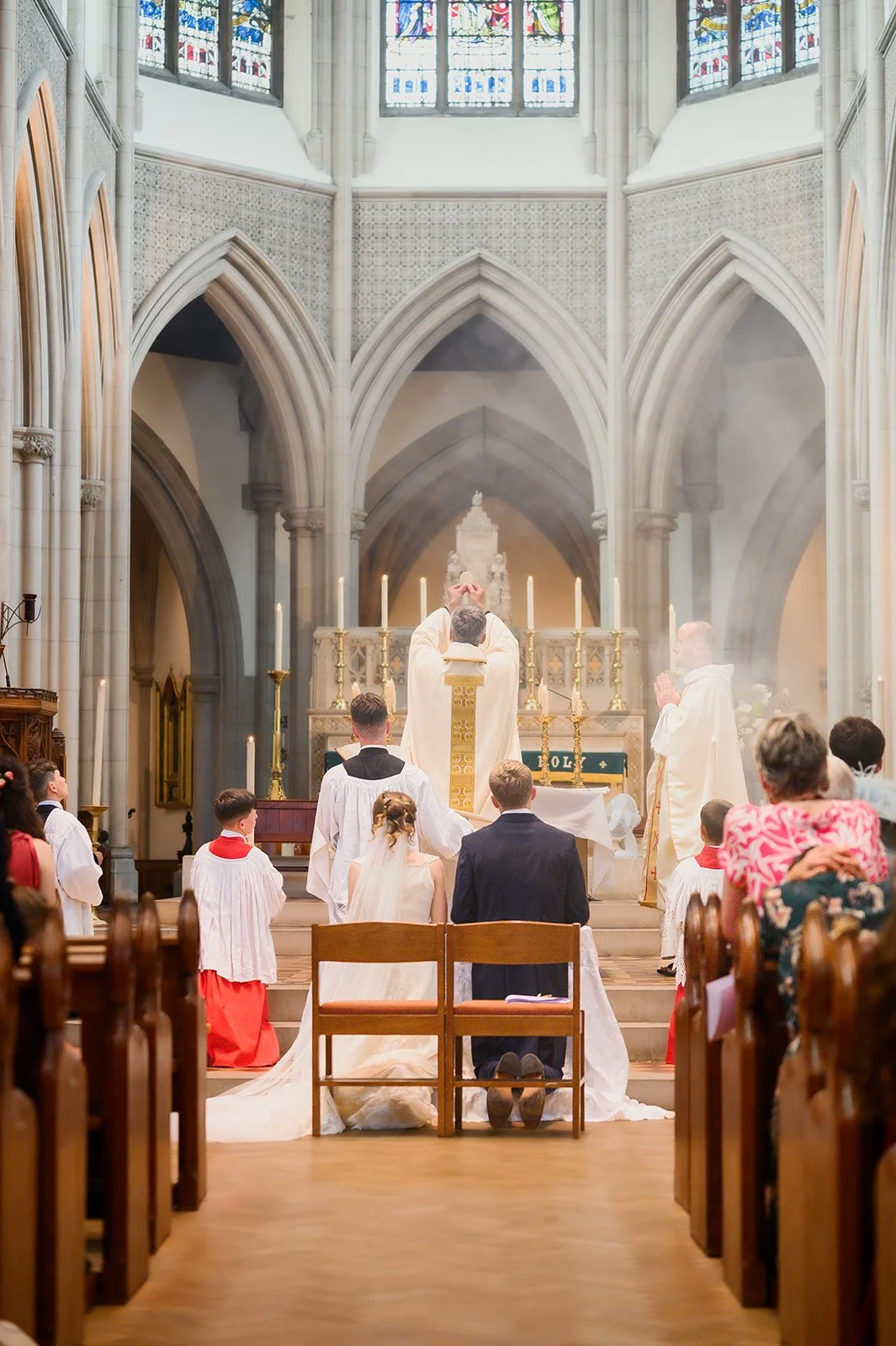
A Catholic wedding is a sacrament, and the Nuptial Mass has its own structure and rhythm. You'll need to allow enough time for the readings, homily, exchange of rings, Liturgy of the Eucharist and Nuptial Blessing - everything you already have in a mass, in addition to the wedding ceremony!
As a rough guide, a Catholic wedding ceremony outside Mass might take around 30 minutes, while a Nuptial Mass often takes around an hour or even an hour and a half. The exact timing will depend on the parish, music, readings, rite and other elements of the liturgy.
Speak to your priest about the length of the ceremony before finalising the rest of your schedule.
2. Allow enough time for getting ready
If you'd like photographs of the preparations, think about when you want your coverage to begin.
This might include details such as your wedding dress, rings and flowers, as well as moments with your family before you leave for the church.
You don't need hours of staged photographs. I prefer to document things naturally as they happen, so the aim is to have enough time to capture the important moments without making the morning feel like a photoshoot. Typically, as the photographer, I’ll arrive 3+ hours prior to the wedding mass time.
It's also worth considering how far you need to travel to the church and allowing some breathing room for getting dressed and leaving on time.
3. Don't underestimate the time needed after Mass
Once the Mass has finished, there are usually plenty of people who want to congratulate you.
Depending on your parish and plans, you might have a receiving line, confetti, photographs with family and friends, or a few moments to greet guests outside the church.
These things can take longer than you expect, particularly if you have a large family or lots of guests. Large catholic families…right?!
I'd recommend deciding in advance whether you'd like a receiving line and where you want it to happen. If you have a strict schedule for the reception, make sure you leave enough time for congratulations and getting everyone organised.
4. Plan your family photographs
Family photographs are important, but they can also take up a surprising amount of time if they're not organised.
Before the wedding, make a list of the group photographs you'd like. Start with the largest groups and work inwards to close family. That way, your more extended family and guests can leave for the reception while you’re still taking family photos.
It's helpful to nominate a family member from each side who knows everyone and can help gather people when needed. That way, you're not relying on the photographer to identify every relative.
For a modest number of group photographs, you might allow 20 to 30 minutes. Larger families or more extensive lists will need longer.
If possible, take these photographs outside/near the church so that you don't lose time moving between locations.
5. Make time for photographs of the two of you
You'll probably want some photographs together, even if you don't want to spend a large part of the day posing.
I'd usually recommend allowing around 20 to 40 minutes for couple portraits, depending on the location, and how much variety you'd like.
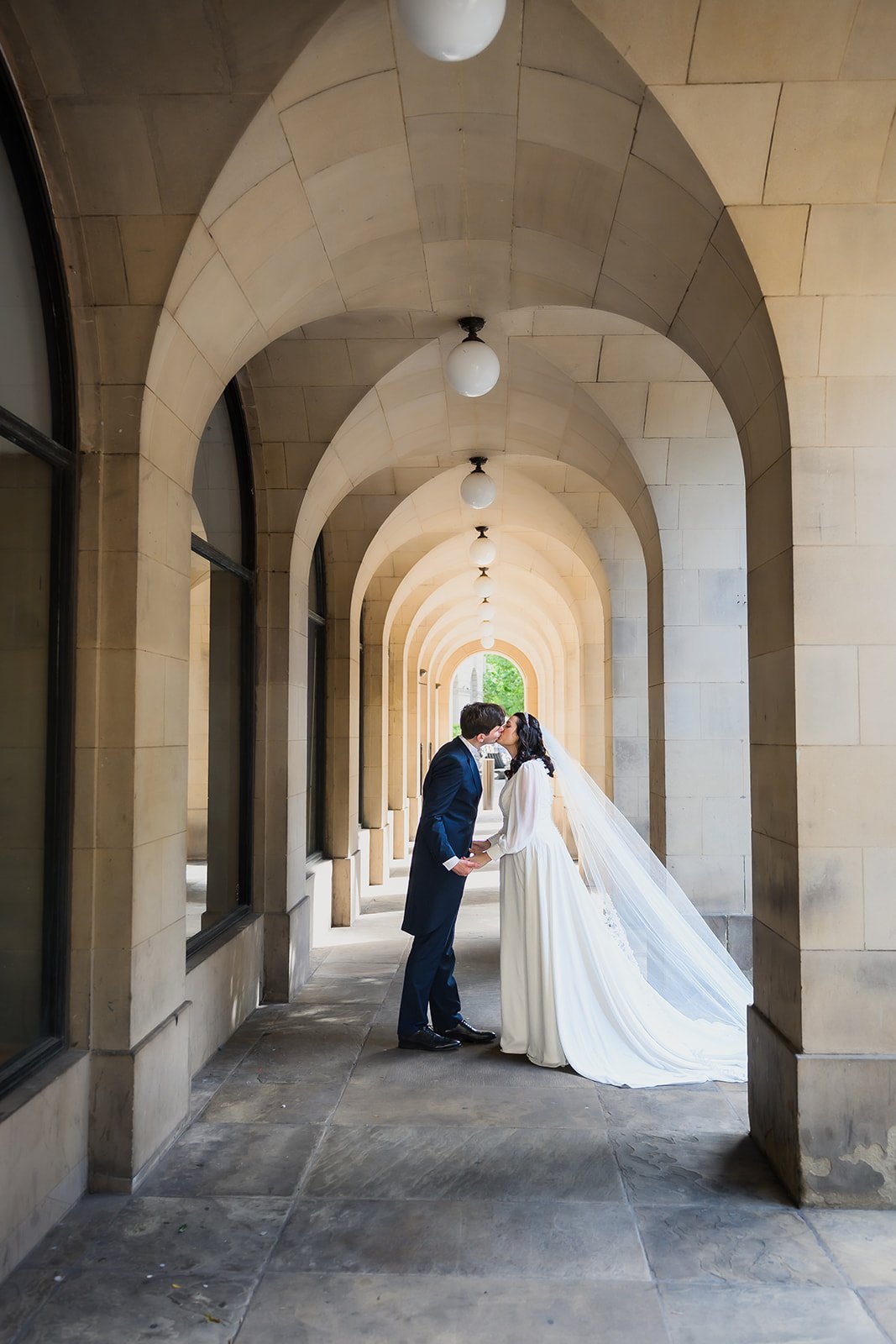
This doesn't need to feel like a long photoshoot. We can take a short walk, find somewhere with good light and photograph you together naturally.
If your church has beautiful architecture or grounds, it’s definitely worth making use of it. Assuming there isn’t another mass, service or adoration afterwards - and assuming your priest is happy with it!
One thing I'd suggest is avoiding a timeline that leaves absolutely no room for portraits. Even a short amount of time can make a real difference.
6. Think about travel between the church and reception
If your reception is somewhere different from the church, factor in the journey time for yourselves and your guests.
Check the route in advance, think about parking and allow extra time for London traffic or other local conditions where relevant.
It's also worth considering whether you'd like photographs at the reception venue before guests arrive. If so, your photographer may need to travel ahead or have time to photograph the space before it fills up.
The important thing is to avoid scheduling everything so tightly that a small delay puts the rest of the day behind.
7. Remember that the timeline doesn't need to be perfect
The best wedding timelines leave some room for things to happen naturally.
People run late, conversations go on longer than expected, and sometimes the best photographs come from moments you couldn't have planned.
For a Catholic wedding, I'd particularly recommend making sure the schedule gives the Mass the time and attention it deserves, rather than treating it as one more item to get through.
A good timeline should help the day run smoothly, not make you feel as though you're constantly watching the clock.
Example Catholic wedding photography timeline
Timeline:
10:00 am Photography coverage begins with preparations
12:30 pm Guests begin arriving at the church
1:00 pm Nuptial Mass begins
2:15 pm Mass finishes, followed by congratulations
2:30 pm Confetti/receiving line
2:45 pm Family group photographs
3:15 pm Couple portraits
3:45 pm Travel to reception
4:15 pm Drinks reception and candid photographs (more reception couple portraits if wanted)
5:00 pm Wedding breakfast
7:00 pm Speeches, depending on your plans
8:00 pm First dance and evening celebrations
This is only an illustration. The Mass might run longer, travel times will vary, and some couples will want more time for preparations or family photographs. Your priest and reception venue should help you confirm the timings.
In summary
When planning your Catholic wedding photography timeline, start with the Mass, allow enough time for the important photographs and avoid squeezing every part of the day together too tightly.
Most importantly, think about what matters to you. Your wedding photographs should reflect the sacrament, the people you love and the day as it actually happened.
If you're planning a Catholic wedding and would like a photographer who understands the Nuptial Mass and works discreetly throughout the day, I'd love to hear about your plans.
